

Does Posture Cause Headaches?
How is my posture causing headaches and jaw pain?
Do you find yourself wondering ‘is my posture causing headaches’ or ‘does my posture affect migraines’? If you've ever gotten to the end of the work day with a pounding headache or tight jaw, your posture could be the cause! Most of us have heard that poor posture is bad for us, to stop hunching, sit up straight and pull our shoulders back to straighten ourselves out, but did you know that poor posture is one of the leading causes of headaches, migraines and jaw pain?
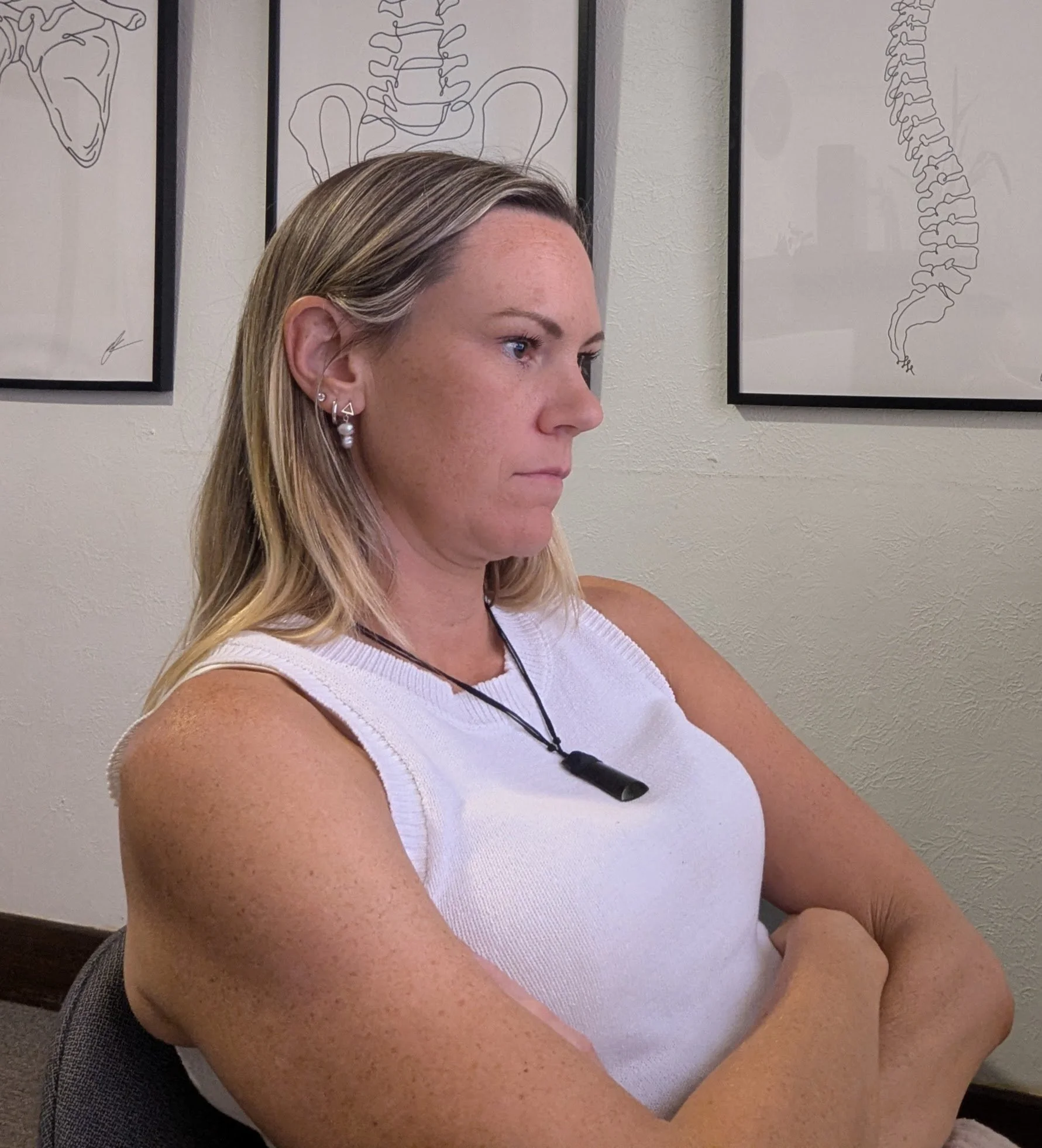
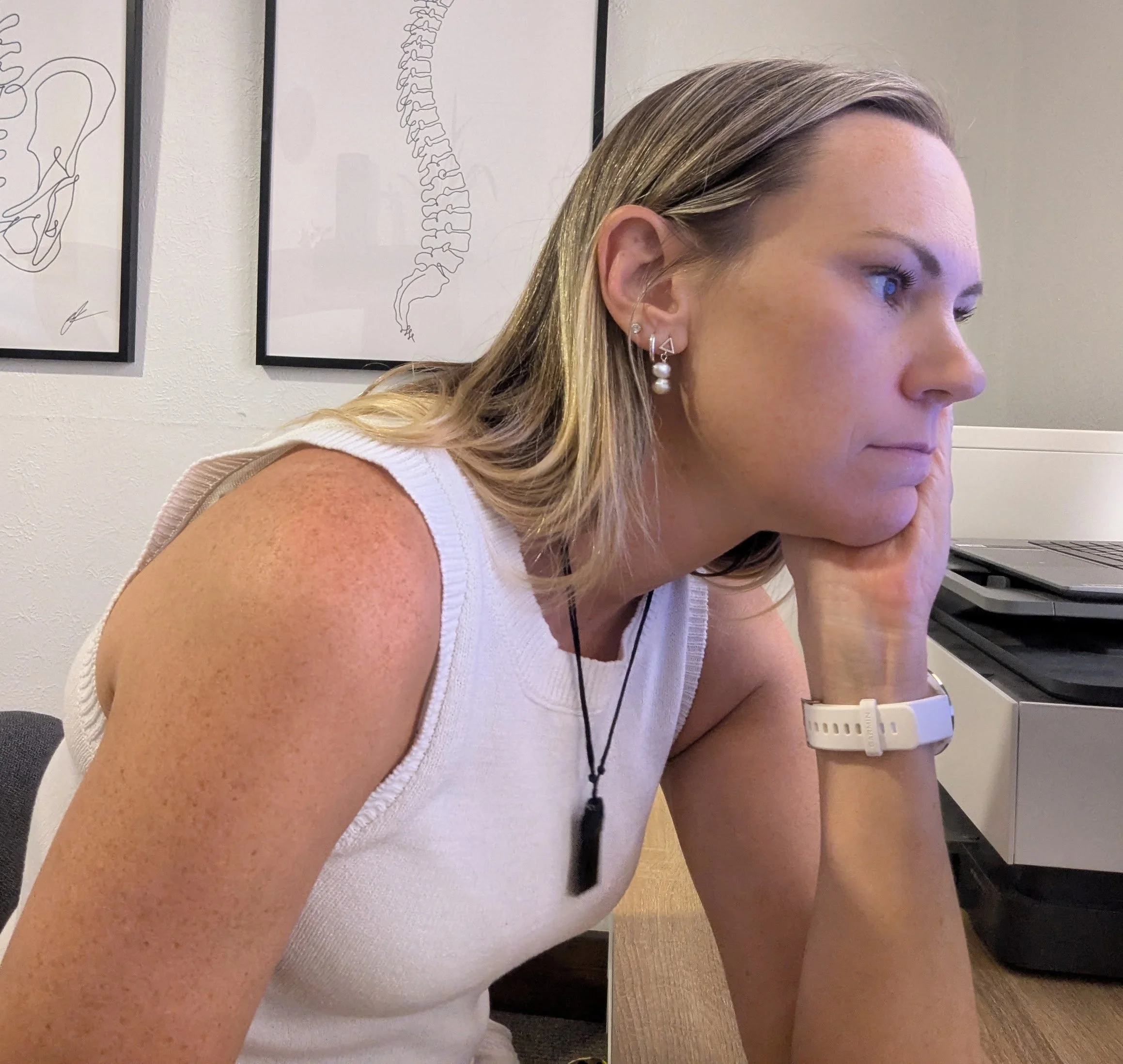
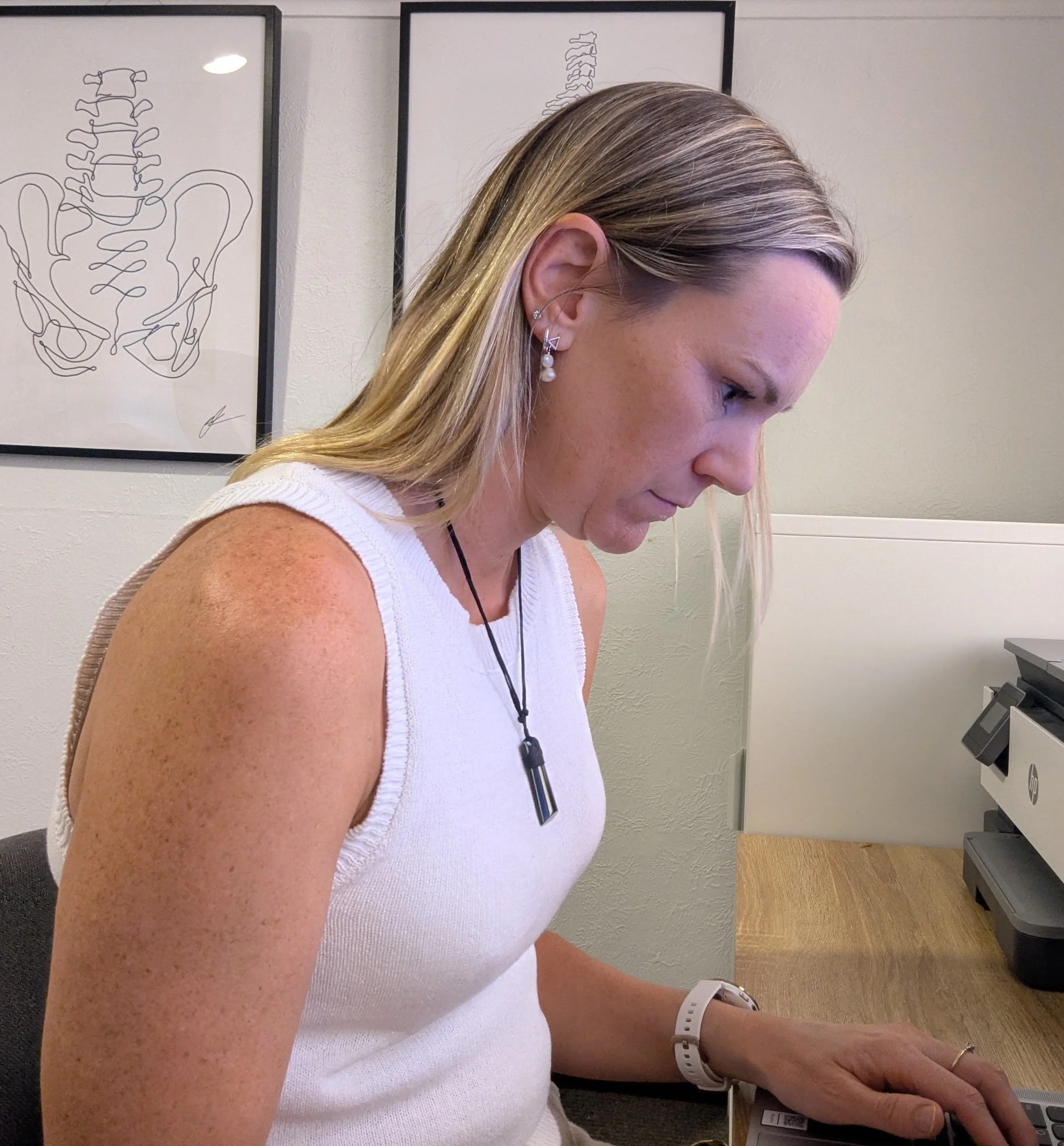
Does any of the following sound familiar to you: you spend 8 hours sitting at your desk hunched over your computer or leaning your elbow on the desk with your chin in your hand, you sit slouched on the couch looking down at your phone for hours, or you sleep on your stomach with your head turned to the side all night. These are some of the common culprits for poor posture, and some of the main reasons how posture causes headaches and bad posture affects jaw pain.
Why does bad posture cause headaches or jaw pain?
Poor posture can cause headaches because it shifts the head forwards, increasing strain on the joints at the top of your neck. Over time these joints become inflamed and irritate the nerves in that area of the spine. These nerves then travel into your brainstem and head, which can trigger headaches.
Poor posture creates excessive tension in the muscles at the base of your skull, as well as the neck, jaw and shoulders. This strain affects the nerves and joints in the upper neck leading to pain. Trigger points can develop in these strained muscles which refer pain into various areas of the head and face, all leading to headaches and migraines caused by poor posture.
When you spend long periods looking down the suboccipital muscles at the base of your skull are being stretched, if prolonged this posture can also cause muscles under the chin to retract and tighten. This pulls the jaw backward causing the jaw joint (the temporomandibular joint (TMJ)) to compress resulting in stiffness, reduced mouth opening, and disc dysfunction. Retraction of the jaw triggers increased tension in the chewing muscles and leads to involuntary teeth grinding (bruxism).
Sitting with your head jutting forward compresses the sub occipital muscles but creates tension in the muscles of the jaw and the front of your neck, leading to jaw pain and headaches. Furthermore, forward head posture narrows the airways which can affect breathing and potentially increase day and nighttime bruxism.
How can I fix my posture?
Now that you know how bad posture affects headaches and that poor posture causes headaches, how can you get relief from heaches caused by poor posture? Becoming aware of postural habits that could be detrimental is the first step. Correcting these habits can have a huge impact on your symptoms and help manage headaches or provide relief from jaw pain.
Habits to look out for include:
Slouching and sinking into soft furniture
Long hours in front of a computer or phone without a break - “tech neck”
Carrying heavy bags - particularly one shoulder bags
Leaning your head in your hands
Sedentary lifestyle and lack of core/back strength
Driving in a slouched posture
Poor sleep posture, such as sleeping on your stomach or wrong pillow height
The following are some simple exercises to help you improve your posture:
When sitting or standing, imagine you have a string out of the top of your head pulling you up. This string will pull you taller and naturally bring you into to correct posture
Set a timer for regular stretching/posture resetting breaks every hour when spending the day working at your desk
Chin tuck exercises: sit or stand tall, gently draw your chin straight back towards your throat, be careful not to tilt up or down. Imagine lengthening the back of your neck. Hold for 5 seconds, repeat 10 times.
Move your computer screen so that its at eye level and use a chair with a supportive back
Wall angels: Stand with your back against a wall. Raise your arms to a ‘W’ position so that your elbows and wrists are touching the wall, then slide them up and down.
Cat-cows: kneel on all fours - alternate between arching your back towards the ceiling and looking down and then dropping your stomach towards the floor and looking up.
Chest stretch: stand in a doorway with arms against the frame and lean forward creating a stretch through the front of your chest.
If you are experiencing persistent headaches, neck pain or jaw pain then it could be worth booking an appointment for an osteopathic assessment. We have designated headache and migraine osteopathic appointments and are here to help with headache pain or give relief for jaw pain or manage migraine symptoms. If you’d like to learn more about how we can help headaches, migraines and TMJ pain with Osteopathy, or if you’d like to book an appointment click the buttons below.